Best places to snorkel in the world: 25 bucket-list spots
Twenty-five of the world's best snorkeling spots, from Raja Ampat and the Great Barrier Reef to Iceland's Silfra fissure, with level, best months, what you'll see and how to get there.
Some links are affiliate links: if you book or buy through them we may earn a commission at no extra cost to you. How this works.
On this page
The world's best snorkeling is not always where the brochures say. Some famous places are better for divers; some little-known ones have clear water a few steps from the beach. We picked 25 spots that are genuinely great from the surface, and gave each one the same card: level from 1 (easy) to 5 (experienced), entry, best months, what you'll see and how to get there.
Map of the world's best snorkel spots
How we chose
- Great from the surface. No spot made the list just because divers love it.
- Reachable. Every spot can be reached on a normal trip, by day boat or from shore.
- Seasonal honesty. We list the months when each spot is actually at its best.
- Rules included. Permits, fees and protected-area rules are in the cards.
Indo-Pacific: the richest reefs on Earth
The Coral Triangle (Indonesia, the Philippines and Papua New Guinea) has more coral and fish species than anywhere else. The trade-off is travel time and, in places, strong currents.
Raja Ampat
West Papua, Indonesia
- Level
- 3 of 5
- Entry
- Boat, some shore at homestays
- Depth
- 1–30 ft over reef tops
- Visibility
- 50–100 ft
- Best months
- October to April
- What you'll see
- The world's richest reef fish diversity, mantas, wobbegong sharks
How to get there
Fly to Sorong via Jakarta, Makassar or Manado, then take the public ferry to Waisai. Most visitors stay at homestays or eco-resorts that run daily snorkel boats. A marine park entry permit is required.
0.500° S, 130.600° EDirections
Manta Point, Nusa Penida
Bali, Indonesia
- Level
- 3 of 5
- Entry
- Boat only
- Depth
- Mantas at 10–30 ft
- Visibility
- 30–60 ft
- Best months
- Year-round; best April to November
- What you'll see
- Reef manta rays at a cleaning station
How to get there
Speedboats from Sanur to Nusa Penida, then snorkel tours on the island. Swell can be big; follow the guide's call.
8.790° S, 115.530° EDirections
Komodo National Park
Flores, Indonesia
- Level
- 4 of 5
- Entry
- Boat only
- Depth
- Shallow reefs to deep walls
- Visibility
- 30–80 ft
- Best months
- April to November
- What you'll see
- Mantas, reef sharks, turtles, very healthy coral
How to get there
Fly to Labuan Bajo from Bali or Jakarta, then day boats or liveaboards. Currents are strong; snorkel where the guide says.
8.600° S, 119.500° EDirections
Sardine run, Moalboal
Cebu, Philippines
- Level
- 2 of 5
- Entry
- Shore, rocky
- Depth
- Sardines at 5–30 ft
- Visibility
- 50–80 ft
- Best months
- Year-round; calmer November to May
- What you'll see
- Millions of sardines, turtles
How to get there
About three hours by bus or car from Cebu City. Enter from Panagsama Beach; the sardine ball is just off the reef wall.
9.940° N, 123.370° EDirections
Palau
Micronesia
- Level
- 2 of 5
- Entry
- Boat
- Depth
- 3–30 ft
- Visibility
- 60–100 ft
- Best months
- November to April
- What you'll see
- Jellyfish Lake, Rock Islands reefs, giant clams
How to get there
Fly to Koror via Guam, Manila or Taipei. Palau requires reef-safe sunscreen by law and a visitor fee. Day boats tour the Rock Islands.
7.160° N, 134.380° EDirections
Kerama Islands
Okinawa, Japan
- Level
- 2 of 5
- Entry
- Shore and boat
- Depth
- 3–30 ft
- Visibility
- Often 100 ft+
- Best months
- May to October
- What you'll see
- Turtles, coral gardens, humpbacks in winter
How to get there
Ferries from Naha (Tomari Port) to Zamami and Tokashiki, 35–90 minutes. Furuzamami Beach has easy shore snorkeling.
26.200° N, 127.300° EDirections
Australia and the South Pacific
Outer Great Barrier Reef
Off Cairns and Port Douglas, Australia
- Level
- 2 of 5
- Entry
- Boat only
- Depth
- 3–40 ft
- Visibility
- 50–100 ft
- Best months
- June to October (best visibility, no stinger season)
- What you'll see
- Giant clams, reef sharks, turtles, Maori wrasse
How to get there
Day boats leave Cairns Marina and Port Douglas every morning. Outer reef trips take 1.5–2 hours each way. See our Great Barrier Reef tour comparison.
16.700° S, 146.100° EDirections
Ningaloo Reef
Exmouth and Coral Bay, Western Australia
- Level
- 2 of 5
- Entry
- Shore and boat
- Depth
- 3–30 ft
- Visibility
- 50–100 ft
- Best months
- March to July for whale sharks
- What you'll see
- Whale sharks, humpbacks (July–October), manta rays, turtles
How to get there
Fly to Learmonth (Exmouth) from Perth. Turquoise Bay is a famous shore drift snorkel; whale shark swims are by licensed boat.
22.100° S, 113.900° EDirections
Moorea lagoon
French Polynesia
- Level
- 1 of 5
- Entry
- Shore and boat
- Depth
- 3–15 ft
- Visibility
- 50–100 ft
- Best months
- May to October
- What you'll see
- Stingrays, blacktip reef sharks, coral gardens
How to get there
Ferry from Papeete (Tahiti), about 30–45 minutes. Lagoon tours stop at stingray and shark sandbanks; shore snorkeling at Plage Publique de Tiahura.
17.480° S, 149.830° WDirections
Rainbow Reef, Taveuni
Fiji
- Level
- 3 of 5
- Entry
- Boat only
- Depth
- 10–40 ft
- Visibility
- 50–100 ft
- Best months
- May to October
- What you'll see
- Soft corals, reef sharks, turtles
How to get there
Fly from Nadi to Taveuni, then boats across the Somosomo Strait. Drifts with the tide; best with a local operator.
16.850° S, 179.950° WDirections
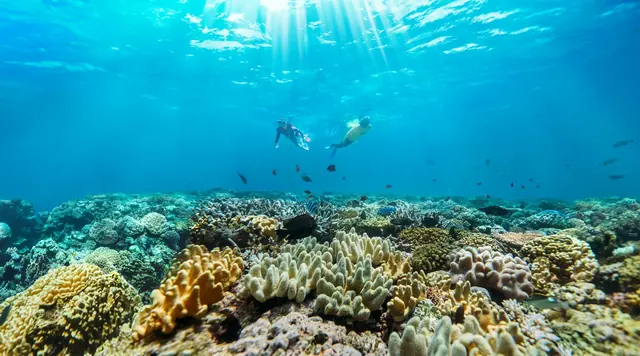
For the Great Barrier Reef, the key choice is between inner reefs (closer, cheaper, lower visibility) and outer reefs (longer boat ride, clearer water). We compared the main day trips in Great Barrier Reef snorkeling from Cairns.
Indian Ocean and Red Sea
South Ari Atoll
Maldives
- Level
- 3 of 5
- Entry
- Boat, resort house reefs
- Depth
- Whale sharks often near the surface
- Visibility
- 50–100 ft
- Best months
- Year-round; calmer December to April
- What you'll see
- Whale sharks all year, mantas, turtles, reef sharks
How to get there
Fly to Male, then seaplane, domestic flight or speedboat to a resort or local island such as Dhigurah. Whale shark trips run along the atoll's outer reef.
3.470° N, 72.830° EDirections
Hanifaru Bay
Baa Atoll, Maldives
- Level
- 3 of 5
- Entry
- Boat only
- Depth
- Mantas feed at the surface
- Visibility
- Plankton-rich (lower)
- Best months
- June to November
- What you'll see
- Mass manta feeding events, whale sharks
How to get there
UNESCO biosphere reserve with strict rules: snorkel only, limited time slots, licensed guides. Reach it from Baa Atoll resorts or local islands.
5.170° N, 73.120° EDirections
Giftun Islands and Ras Mohammed
Red Sea, Egypt
- Level
- 2 of 5
- Entry
- Boat and resort house reefs
- Depth
- 3–40 ft
- Visibility
- 60–100 ft
- Best months
- April to November
- What you'll see
- Hard corals, Red Sea endemics, dolphins, turtles
How to get there
Day boats from Hurghada (Giftun) and Sharm el-Sheikh (Ras Mohammed). National park fees apply. Many resorts have excellent house reefs.
27.190° N, 33.920° EDirections
The Maldives is two different trips depending on your budget: resorts with excellent house reefs you can swim to from your room, or local islands such as Maafushi and Dhigurah with day boats to the best sites.
Hawaii
Manta ray night snorkel
Kona, Big Island, Hawaii
- Level
- 2 of 5
- Entry
- Boat only
- Depth
- Holding a float at the surface
- Visibility
- Lit by the boat lights
- Best months
- Year-round
- What you'll see
- Reef manta rays feeding at night
How to get there
Tours leave from Keauhou Bay or Honokohau Harbor near Kailua-Kona. See our manta tour comparison.
19.563° N, 155.965° WDirections
Molokini Crater
Maui, Hawaii
- Level
- 2 of 5
- Entry
- Boat only
- Depth
- 10–80 ft
- Visibility
- Often 100 ft+
- Best months
- Year-round, mornings
- What you'll see
- Butterflyfish, moray eels, whitetip reef sharks
How to get there
Tours from Kihei (15–20 minutes) or Maalaea Harbor (about an hour). See our Molokini tour comparison.
20.632° N, 156.496° WDirections
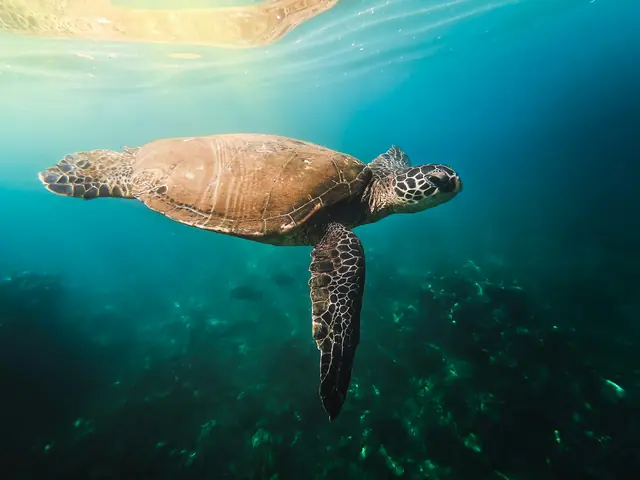
Hawaii has the easiest world-class snorkeling in the US. See best places to snorkel in Hawaii for 20 spots across five islands.
Caribbean and Mexico
Bonaire
Caribbean Netherlands
- Level
- 1 of 5
- Entry
- Shore, everywhere
- Depth
- 3–40 ft
- Visibility
- 60–100 ft
- Best months
- Year-round
- What you'll see
- Healthy reef, frogfish, turtles, tarpon
How to get there
Direct flights from the US and Amsterdam. Rent a pickup, buy the marine park tag and drive to any of the yellow-stone marked shore sites.
12.150° N, 68.270° WDirections
Hol Chan and Shark Ray Alley
Ambergris Caye, Belize
- Level
- 2 of 5
- Entry
- Boat only
- Depth
- 5–30 ft
- Visibility
- 50–80 ft
- Best months
- March to June (calmest)
- What you'll see
- Nurse sharks, southern stingrays, turtles, eagle rays
How to get there
Half-day boats from San Pedro (Ambergris Caye) or Caye Caulker. Marine reserve fee applies. See our Belize guide.
17.860° N, 87.970° WDirections
Palancar Reef
Cozumel, Mexico
- Level
- 2 of 5
- Entry
- Boat only
- Depth
- 10–40 ft
- Visibility
- 80–100 ft+
- Best months
- Year-round; calmer March to July
- What you'll see
- Coral towers, turtles, eagle rays, splendid toadfish
How to get there
Boat tours from San Miguel and the cruise piers. Expect drift snorkeling with the current. See our Cozumel guide.
20.320° N, 87.030° WDirections
Akumal Bay
Riviera Maya, Mexico
- Level
- 1 of 5
- Entry
- Shore, sandy
- Depth
- 3–15 ft
- Visibility
- Good
- Best months
- Year-round
- What you'll see
- Green sea turtles grazing on sea grass
How to get there
About 1.5 hours south of Cancún on Highway 307. Turtle areas are roped off and require a registered guide and life vest.
20.390° N, 87.310° WDirections
Whale sharks off Isla Mujeres
Quintana Roo, Mexico
- Level
- 3 of 5
- Entry
- Boat only
- Depth
- Open ocean
- Visibility
- Plankton-rich
- Best months
- June to September
- What you'll see
- Whale sharks, sometimes manta rays and sailfish
How to get there
Licensed tours leave from Cancún, Isla Mujeres and Holbox. Only two swimmers and a guide may be in the water with a shark at a time.
21.500° N, 86.750° WDirections
Buck Island Reef
St. Croix, US Virgin Islands
- Level
- 2 of 5
- Entry
- Boat only
- Depth
- 3–30 ft
- Visibility
- 50–80 ft
- Best months
- Year-round
- What you'll see
- Elkhorn coral, turtles, underwater marked trail
How to get there
Licensed concessionaire boats from Christiansted and Green Cay Marina. National monument; see our St. Croix guide.
17.790° N, 64.620° WDirections
Trunk Bay
St. John, US Virgin Islands
- Level
- 1 of 5
- Entry
- Shore, sandy
- Depth
- 3–20 ft
- Visibility
- Good
- Best months
- Year-round
- What you'll see
- Underwater snorkel trail, reef fish, turtles
How to get there
Ferry from Red Hook (St. Thomas) to Cruz Bay, then taxi or rental car. National park day-use fee. See our St. Thomas and St. John guide.
18.353° N, 64.770° WDirections
Smith's Reef and Bight Reef
Providenciales, Turks and Caicos
- Level
- 2 of 5
- Entry
- Shore, sandy
- Depth
- 3–25 ft
- Visibility
- 60–100 ft
- Best months
- Year-round
- What you'll see
- Turtles, eagle rays, coral heads
How to get there
Both reefs are off Grace Bay's west end on Providenciales, reachable from public beach accesses. See our Turks and Caicos guide.
21.797° N, 72.217° WDirections
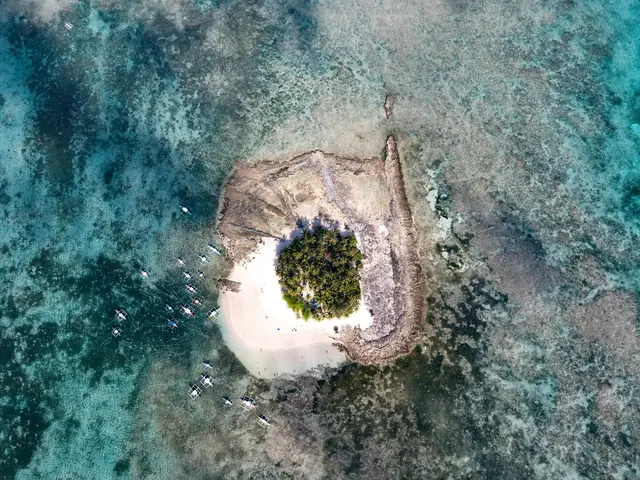
Our Caribbean snorkeling guide ranks 15 islands and links to detailed guides for Belize, Cozumel, St. Croix and Turks and Caicos.
The Americas and the Arctic
Galápagos Islands
Ecuador
- Level
- 3 of 5
- Entry
- Boat and shore
- Depth
- 5–40 ft
- Visibility
- 30–80 ft
- Best months
- December to May (warmer, calmer)
- What you'll see
- Sea lions, marine iguanas, penguins, hammerheads at Kicker Rock
How to get there
Fly to Baltra or San Cristóbal from Quito or Guayaquil. National park fee and transit card required. Snorkel from day boats or a cruise.
0.780° S, 89.520° WDirections
Silfra Fissure
Thingvellir National Park, Iceland
- Level
- 3 of 5
- Entry
- Stairs into the fissure, drysuit required
- Depth
- Up to 200 ft below you
- Visibility
- Often more than 300 ft
- Best months
- Year-round
- What you'll see
- Almost none: it is all about the water clarity and rock walls
How to get there
About 45 minutes by car from Reykjavik. Snorkeling is only allowed with a licensed tour operator. See our Silfra guide.
64.256° N, 21.117° WDirections
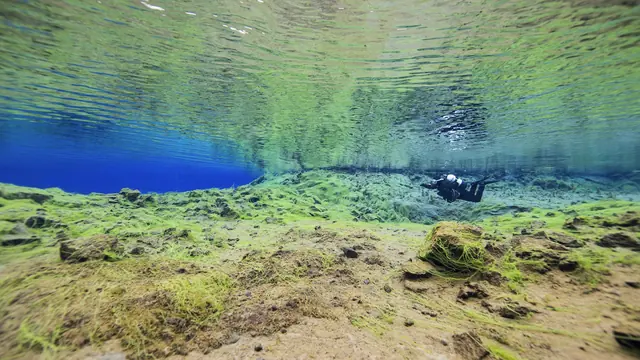
Silfra is unlike anywhere else on this list. There is very little marine life; you go for the visibility, which can reach well over 300 feet, and the feeling of floating in a crack between the North American and Eurasian plates. Read Silfra snorkeling in Iceland before you book.
Tours worth booking
Most of these spots are best with a local operator. These are the trips we link to most:
| Tour | Leaves from | Time | Group | From | Book |
|---|---|---|---|---|---|
| Manta ray night snorkel, KonaViator: mantas at night | Keauhou, Hawaii | About 1.5 h | Small group | $145 | Check availability |
| Great Barrier Reef half-day snorkelGetYourGuide: marine biologist on board | Cairns, Australia | Half day | Up to 40 | — | Check availability |
| Silfra snorkeling between tectonic platesGetYourGuide: drysuit included | Thingvellir, Iceland | About 3 h | Small group | $139 | Check availability |
| Nusa Penida Manta Point snorkelGetYourGuide: mantas plus island tour | Nusa Penida, Bali | Full day | Group | $28 | Check availability |
| Hurghada islands, dolphins and snorkelGetYourGuide: Giftun National Park | Hurghada, Egypt | Full day | Speedboat | $52 | Check availability |
| Maldives snorkeling toursGetYourGuide: whale sharks, mantas | Maldives | Half to full day | Varies | $50 | See all tours |
Plan by month
| Month | Where to go |
|---|---|
| January to March | Bonaire, Maldives, Raja Ampat, Galápagos |
| April to June | Ningaloo whale sharks, Belize, Cozumel, Red Sea, Komodo |
| July to September | Great Barrier Reef (clear, no stingers), Isla Mujeres whale sharks, Hanifaru mantas, Okinawa |
| October to December | Raja Ampat, Palau, Hawaii south shores, Fiji |
What to pack for a snorkel trip abroad
- A mask that fits you. Rental masks are the most common reason a great spot disappoints. See best snorkel sets.
- Short travel fins for drifts and boat trips.
- Mineral sunscreen. Palau, Hawaii, the US Virgin Islands, Aruba, Bonaire and parts of Mexico restrict chemical sunscreens. See reef-safe sunscreen.
- A camera that floats or a floating strap. See underwater cameras for snorkeling.
- Seasickness tablets for long boat days.
Questions people ask
Where is the best snorkeling in the world?
What is the best snorkeling destination for beginners?
When is the best time to snorkel with whale sharks?
Do I need to be a strong swimmer for these trips?
Is snorkeling in Iceland really cold?
Keep reading
 HawaiiBest places to snorkel in Hawaii: 20 spots by island
 CaribbeanBest snorkeling in the Caribbean: 15 islands ranked
 ToursGreat Barrier Reef snorkeling from Cairns: best tours compared
 ToursSilfra snorkeling in Iceland: drysuit, tours and what it's really like
 GearBest underwater cameras for snorkeling
 GearBest snorkel sets of 2026: mask, snorkel and fin combos