Full face vs traditional snorkel mask: which is safer and better?
Full face and traditional snorkel masks compared on safety, comfort, view, diving down, fit and tour rules, with a clear recommendation for each type of snorkeler.
Some links are affiliate links: if you book or buy through them we may earn a commission at no extra cost to you. How this works.
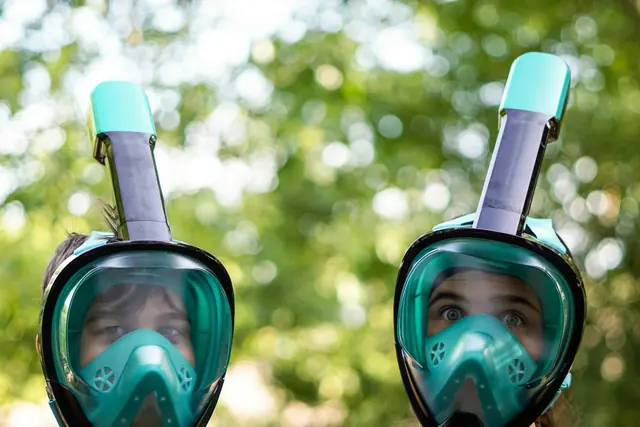
Full face snorkel masks look like the obvious upgrade: breathe normally, see everything, no mouthpiece. Traditional masks look old-fashioned by comparison. In practice, the traditional mask is the safer and more versatile choice for nearly everyone.
Side by side
| Traditional mask + snorkel | Full face mask | |
|---|---|---|
| Breathing | Through the mouth | Through nose or mouth |
| Air volume | Small | Large |
| CO2 concerns | Low with a good snorkel | Raised in studies and reports, especially in cheap designs |
| Removal in a panic | Pull the snorkel out, lift the mask | Must lift the whole mask off the head |
| Diving down | Yes | No |
| Fit | Many sizes and shapes | Fewer sizes; beards and small faces leak |
| Tour rules | Allowed everywhere | Banned by many operators |
| Price | Low to mid | Mid to high for good brands |
Safety
The main concerns about full face masks are carbon dioxide rebreathing (if exhaled air is not fully cleared), difficulty clearing water, and difficulty removing the mask quickly when panicking or exhausted. The evidence is still developing. We cover studies, recalls and tour bans in are full face snorkel masks safe.
Comfort and learning curve
Full face masks win the first five minutes: no mouthpiece, natural breathing. Traditional masks win after that: smaller, lighter and easy to clear. Most people get used to mouth breathing within one session. See how to snorkel.
Our picks for each
| Pick | Best for | Skip it if | Price |
|---|---|---|---|
Cressi F1 + Supernova DryTraditional pick | Almost everyone | People who cannot breathe through their mouth comfortably | Check price |
Ocean Reef Aria QR+Full face pick | Surface snorkelers set on a full face mask | Diving down, kids, strenuous swimming | Check price |
Traditional pick
Cressi F1 + Supernova Dry
A low-volume frameless mask with a dry snorkel: easy to clear, allowed on every tour and inexpensive.
- Type
- Mask plus dry snorkel
Good
- Safe
- Allowed everywhere
- Cheap
Not so good
- Mouth breathing takes practice
Full face pick
Ocean Reef Aria QR+
If you choose a full face mask, choose one from a brand that publishes testing and separates fresh and exhaled air.
- Airflow
- Separated
Good
- Natural breathing
- Published testing
Not so good
- Expensive
- Banned on some tours
Who should choose what
- Beginners, kids, weaker swimmers: traditional mask, dry snorkel and a vest.
- Anyone joining a tour: traditional (check the operator's rules).
- Anyone who wants to dive down: traditional.
- Calm surface snorkelers who strongly prefer it: a full face mask from a reputable brand, used carefully. See best full face snorkel masks.