Best snorkeling on the Big Island: Kona Coast spots and Captain Cook tours
The Big Island's best snorkel spots on the Kona, Kohala and Hilo coasts, with directions, levels and seasons, plus Kealakekua Bay tours compared.
Some links are affiliate links: if you book or buy through them we may earn a commission at no extra cost to you. How this works.
On this page
The Big Island's west coast is in the rain shadow of two huge volcanoes. That means calm, clear water most mornings, very little runoff and some of the best visibility in Hawaii. The trade-off is that the coast is mostly lava, so many entries are rocky. Choose a sandy beach if you are new to snorkeling, and wear reef shoes everywhere else.
Map of Big Island snorkel spots
Kona coast
Kona is where most visitors stay and where most of the best snorkeling is. Kealakekua Bay and Two Step are the two must-dos.
Kealakekua Bay (Captain Cook Monument)
South Kona
- Level
- 2 of 5
- Entry
- Boat, permitted kayak or long hike
- Depth
- 5–100 ft
- Visibility
- Often 100 ft
- Best months
- Year-round
- Facilities
- On the boat
- Fees and permits
- Included in tour price
- What you'll see
- Very healthy coral, spinner dolphins in the bay, reef fish
How to get there
Easiest by boat tour from Keauhou or Kailua-Kona. The Kaawaloa trail is a steep 3.8-mile round trip. Kayak landing rules change; check the state park before renting.
19.478° N, 155.931° WDirections
Two Step (Honaunau Bay)
South Kona
- Level
- 2 of 5
- Entry
- Shore, flat lava steps
- Depth
- 5–60 ft
- Visibility
- Excellent
- Best months
- Year-round, calm days
- Facilities
- Restrooms at the national park
- Fees and permits
- Free; park fee if you use the NPS lot
- What you'll see
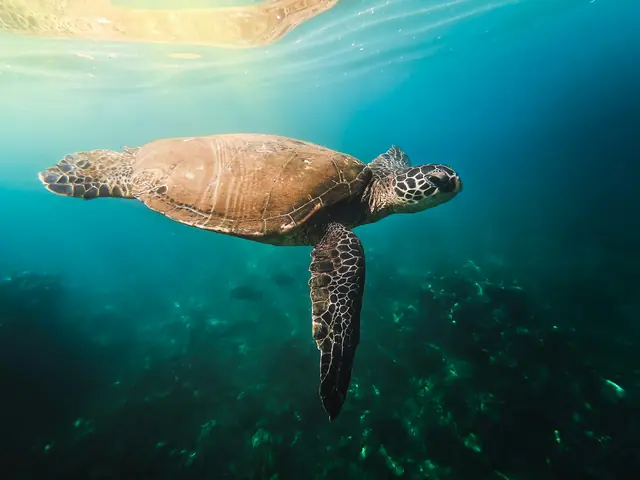
- Turtles, spinner dolphins some mornings, reef fish
How to get there
About 40 minutes south of Kailua-Kona, next to Puuhonua o Honaunau National Historical Park. Arrive early: the small lot fills by 9 am.
19.423° N, 155.913° WDirections
Kahaluu Beach Park
Kailua-Kona
- Level
- 1 of 5
- Entry
- Shore, sandy and rocky
- Depth
- 2–10 ft
- Visibility
- Good when calm
- Best months
- Year-round, calm days
- Facilities
- Restrooms, showers, lifeguard, rentals
- Fees and permits
- Free
- What you'll see
- Turtles, yellow tang, parrotfish
How to get there
On Alii Drive about 15 minutes south of Kailua-Kona. A breakwater shelters the bay; stay inside it.
19.580° N, 155.967° WDirections
Kikaua Point Park
Kukio, North Kona
- Level
- 1 of 5
- Entry
- Shore, sandy
- Depth
- 2–10 ft
- Visibility
- Good
- Best months
- Year-round
- Facilities
- Restrooms, showers
- Fees and permits
- Free; limited daily passes
- What you'll see
- Turtles, reef fish in a calm cove
How to get there
Inside the Kukio resort community. The guard gate issues a limited number of free public parking passes each day; arrive early.
19.818° N, 155.993° WDirections
Captain Cook (Kealakekua Bay) tours compared
Kealakekua Bay is a protected marine life conservation district, and the reef by the Captain Cook Monument is best reached by boat. These are the main options:
| Tour | Leaves from | Time | Group | From | Book |
|---|---|---|---|---|---|
| Small-group Kealakekua Bay snorkelViator: small group | Keauhou | About 3.5 h | Up to 12 | $109 | Check availability |
| Afternoon sail to Captain Cook MonumentViator: relaxed afternoon sail | Keauhou | About 3.5 h | Sailing catamaran | $136 | Check availability |
| Morning deluxe snorkel cruiseViator: breakfast and lunch included | Keauhou | About 4.5 h | Large catamaran | $194 | Check availability |
| Captain Cook snorkel tourGetYourGuide: short and simple | Kona | 2.5 h | Small boat | — | Check availability |
Morning tours usually have calmer water and a better chance of seeing spinner dolphins in the bay (they rest during the day, so give them space and never swim toward them). Afternoon sails are quieter and often cheaper.
Kohala coast
North of the airport, the Kohala resorts sit on sandy coves with reef at either end. Several beaches are inside resort gates but have free public parking passes; they run out on busy days.
Beach 69 (Waialea Bay)
South Kohala
- Level
- 2 of 5
- Entry
- Shore, sandy
- Depth
- 5–30 ft
- Visibility
- Good
- Best months
- Year-round
- Facilities
- Restrooms, showers
- Fees and permits
- Free
- What you'll see
- Turtles, coral heads
How to get there
Off Puako Beach Drive. Public lot near utility pole 71. Snorkel the south end of the bay.
19.951° N, 155.864° WDirections
Puako reef
South Kohala
- Level
- 2 of 5
- Entry
- Shore, rocky
- Depth
- 3–40 ft
- Visibility
- Good
- Best months
- Calm days
- Facilities
- None
- Fees and permits
- Free
- What you'll see
- Long fringing reef, turtles, octopus
How to get there
Shoreline accesses along Puako Beach Drive. Enter over lava; wear reef shoes.
19.968° N, 155.846° WDirections
Kaunaoa (Mauna Kea Beach)
South Kohala
- Level
- 1 of 5
- Entry
- Shore, sandy
- Depth
- 3–25 ft
- Visibility
- Good
- Best months
- Summer, calm winter days
- Facilities
- Restrooms, showers
- Fees and permits
- Free; limited public passes
- What you'll see
- Reef along the north point, manta rays at night near the resort point
How to get there
Through the Mauna Kea Beach Hotel gate. A limited number of free public parking passes are issued daily.
20.006° N, 155.823° WDirections
Hilo side
Richardson's Ocean Park
Hilo
- Level
- 2 of 5
- Entry
- Shore, black sand and lava
- Depth
- 3–15 ft
- Visibility
- Fair; cold freshwater springs
- Best months
- Calm summer days
- Facilities
- Restrooms, showers, lifeguard
- Fees and permits
- Free
- What you'll see
- Turtles, reef fish
How to get there
On Kalanianaole Avenue about 10 minutes east of downtown Hilo. Cold spring water creates shimmering layers near shore.
19.737° N, 155.016° WDirections
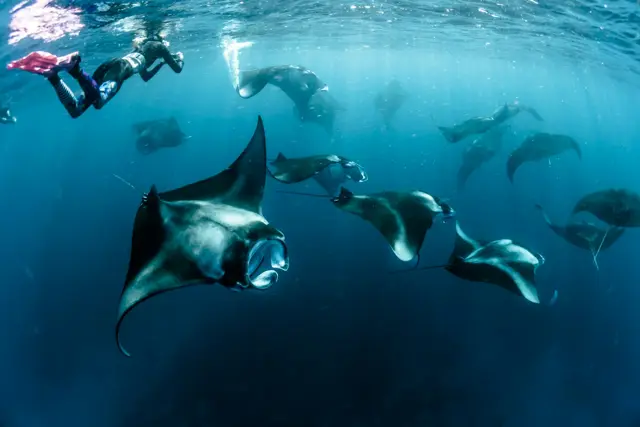
Manta ray night snorkel
Manta ray night snorkel
Keauhou and Honokohau
- Level
- 2 of 5
- Entry
- Boat only
- Depth
- Surface
- Visibility
- Lit by boat lights
- Best months
- Year-round
- Facilities
- On the boat
- Fees and permits
- Included in tour
- What you'll see
- Reef manta rays
How to get there
See our manta ray tour comparison for operators and harbors.
19.563° N, 155.965° WDirections
The Big Island's most famous trip happens after dark. We compared seven operators in manta ray night snorkel in Kona.
Rules and safety
- Spinner dolphins: federal rules prohibit swimming within 50 yards (about 45 meters) of Hawaiian spinner dolphins. They rest in bays like Kealakekua and Honaunau during the day. Enjoy them from a distance.
- Sunscreen: Hawaii bans oxybenzone and octinoxate sunscreens. Use mineral sunscreen.
- Lava entries: watch a few sets of waves before getting in, and plan your exit before you enter.
- Flotation: a snorkel vest makes deep-water entries like Two Step much more relaxed for weaker swimmers.
For the other islands, see best places to snorkel in Hawaii.